
A logo is not a brand. It is a mark. It is the signature at the bottom of the letter, but it is not the letter itself, the voice it is written in, or the trust built over years of consistent communication.
Most businesses invest thousands in a logo and then wonder why their brand still feels scattered, generic, or unconvincing. The answer is almost always the same: they built the signature before they wrote the letter.
A brand identity is a complete system, visual, verbal, and strategic, that tells the world who you are and why you matter. A logo is one element within that system. Treating them as the same thing is one of the most expensive mistakes a growing business can make.
A logo is a single visual mark, a symbol, wordmark, or combination whose sole job is recognition. It helps customers identify your business quickly, across a storefront, a social feed, or a product label. It is visual shorthand.
A brand identity is the full architecture behind that mark. It is the coordinated system of visual and verbal elements that shapes how your business is perceived across every interaction with a customer.
Here is how they compare:
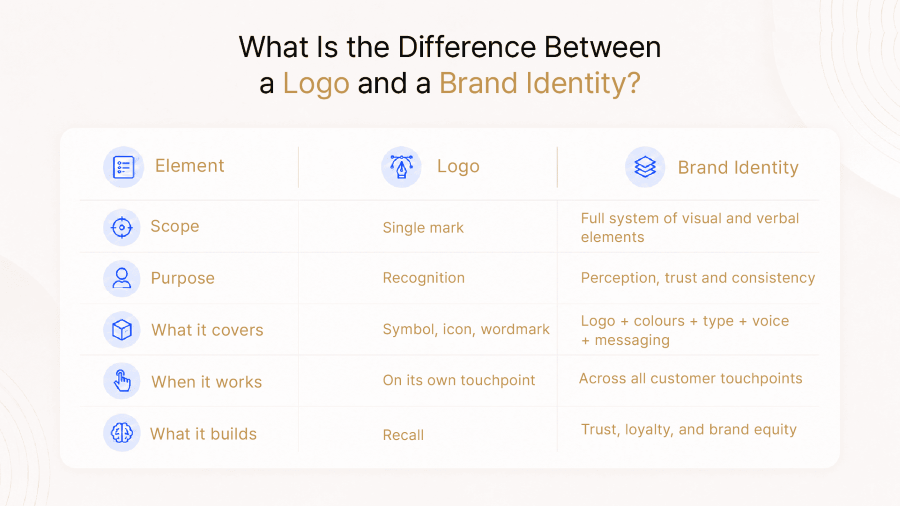
The logo is the front door. The brand identity is the entire building, the architecture, the interior, the signage, and the way the staff speaks to customers when they walk in.
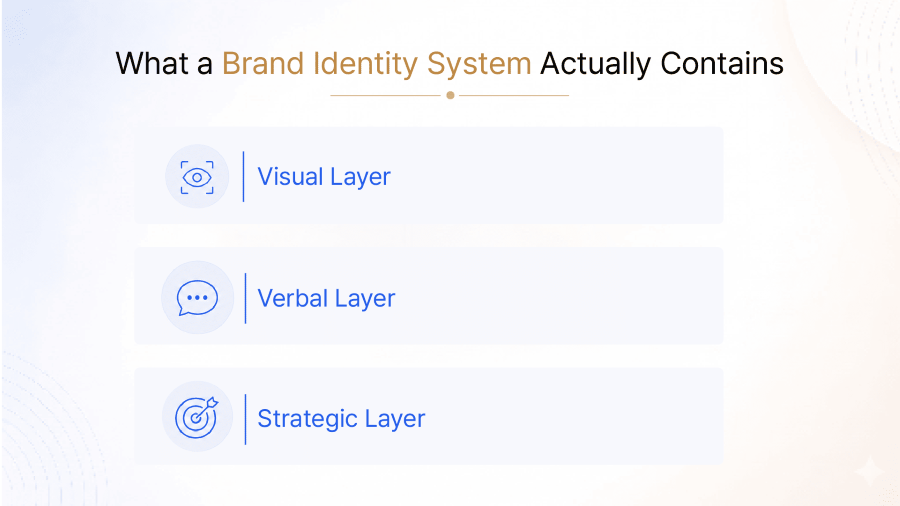
A fully developed brand identity is built across three layers:
Visual Layer
Verbal Layer
Strategic Layer
A logo alone covers none of the verbal or strategic layers, and only one item within the visual layer. That leaves the vast majority of what builds trust and drives recognition untouched.
Here is what actually happens to businesses that have a logo but not an identity system:
"Every design decision is based on user psychology, accessibility, industry context, and brand archetypes, not decoration. Design is strategic decision-making." Integra Magna
The data on brand consistency is unambiguous:
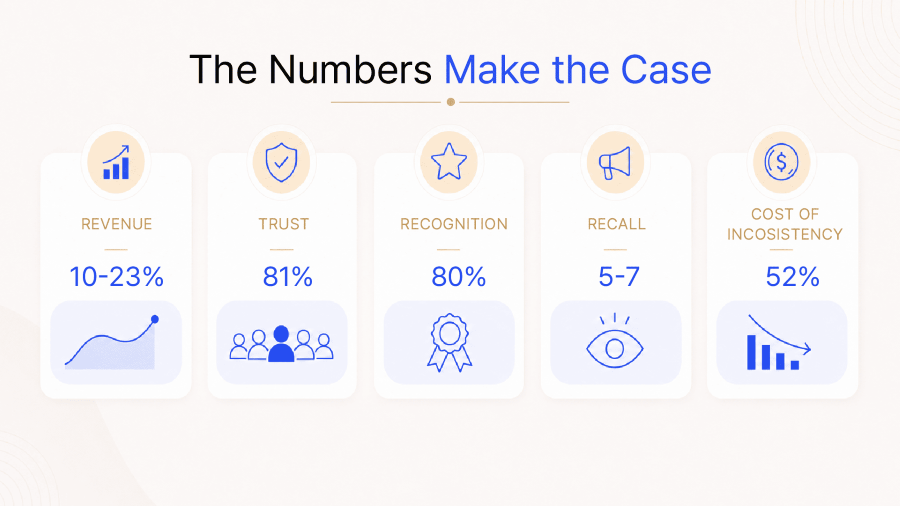
These are not aesthetic concerns. They are commercial ones.
Strategy always comes first:The most common mistake businesses make is commissioning a logo before defining who they are. The result is a mark that looks professional but means nothing because it was not built on top of a foundation of clarity.
The correct sequence is:
A logo designed without this foundation is guesswork with good kerning. It might look appealing, but it cannot carry the weight of what a brand needs to do in the market.
This is why businesses that start with a logo often undergo expensive rebrands 2–3 years later, not because the logo was bad, but because it was built before the business knew what it was.
If your business currently has a logo but not a full identity system, you are not starting from zero. You are building around an existing asset.
Here is a practical starting point:
These five steps do not replace a full brand identity build, but they prevent the most visible signs of a missing system. From there, the next step is working with a studio that can audit, formalise, and scale what you have built.
A logo is where the brand is visible. An identity is where the brand lives.
Businesses that invest in a logo without building the surrounding system are betting that a single mark can do the work of an entire communication architecture. It cannot. It will look credible in isolation and feel hollow the moment a customer encounters a second touchpoint that does not match.
Brand identity is not a premium add-on for large companies. It is the foundational infrastructure that makes every other investment in marketing, sales, and customer experience work harder.
If your brand currently feels scattered, inconsistent, or unable to command the positioning you deserve, the logo is probably not the problem. The system around it is what is missing.
At Integra Magna, we build brand identity systems that translate business strategy into every customer touchpoint from the first impression to the ongoing relationship. If you are ready to move beyond the logo, let's talk.
Is a logo the same as a brand identity?
No. A logo is a single visual mark used for recognition. Brand identity is the complete system of visual elements (colours, typography, imagery), verbal elements (voice, tone, messaging), and strategic foundations (mission, values, positioning) that shape how a business is perceived across all customer touchpoints.
Why is brand identity more important than just a logo?
A logo can trigger recall, but it cannot build trust, communicate values, or maintain consistency across channels on its own. Brand identity provides the full toolkit, the rules, elements, and language that ensure every customer interaction reinforces the same impression. Consistent brand presentation has been shown to increase revenue by 10–23%.
What does a brand identity include?
A complete brand identity includes: a logo system (primary, secondary, and icon variants), a colour palette with usage rules, typography hierarchy, imagery and photography direction, brand voice and tone guidelines, core messaging and taglines, and a strategic foundation covering mission, values, and target audience.
Which comes first, logo or brand identity?
Strategy comes first, followed by identity, and the logo is the final visual output. Businesses that design a logo before defining their mission, positioning, and target audience often face expensive rebrands within 2–3 years, because the mark was not built on a clear foundation.
How does brand consistency affect revenue?
Research consistently shows that maintaining consistent brand presentation across all platforms can increase revenue by 10–23%. Inconsistent branding, by contrast, costs businesses millions annually in lost trust and missed conversions, with 76% of customers reporting they lose trust in brands with inconsistent messaging.