
.png)
Can AI replace designers? Partially yes. AI has already replaced the mechanical execution layers of design: layout generation, retouching, and template production. But AI cannot replace the strategic designer, the professional who defines what to create, why it matters, and who is accountable for the result. In 2026, the line is drawn at intent, empathy, and accountability.
If you're looking for a reassuring "No," you're asking the wrong question.
AI has already replaced a vast portion of what the world called "design" for the past two decades. But the Designer, the strategic architect of business intent and human emotion, is not replaceable by any machine in existence. The shift in 2026 isn't the death of design. It's the death of the middleman.
AI design automation is no longer a future threat. It's a present-day utility. By 2026, it has decisively replaced:
Key Takeaway: AI has replaced the Hands of design in the execution layer. It has not replaced the Head of the strategy, intent, and judgment layer.
At Integra Magna, this shift produced leverage, not redundancy. Our designers direct machines to push pixels intelligently, freeing human capacity for the decisions that determine whether a project truly succeeds.
AI will replace production UX. It will not replace strategic UX.
If your UX career is built on Figma speed, the risk is real. If it's built on understanding why users behave the way they do, you are not at risk; you are in demand.
The value of human design comes down to three things AI cannot replicate: the Three Human Moats:
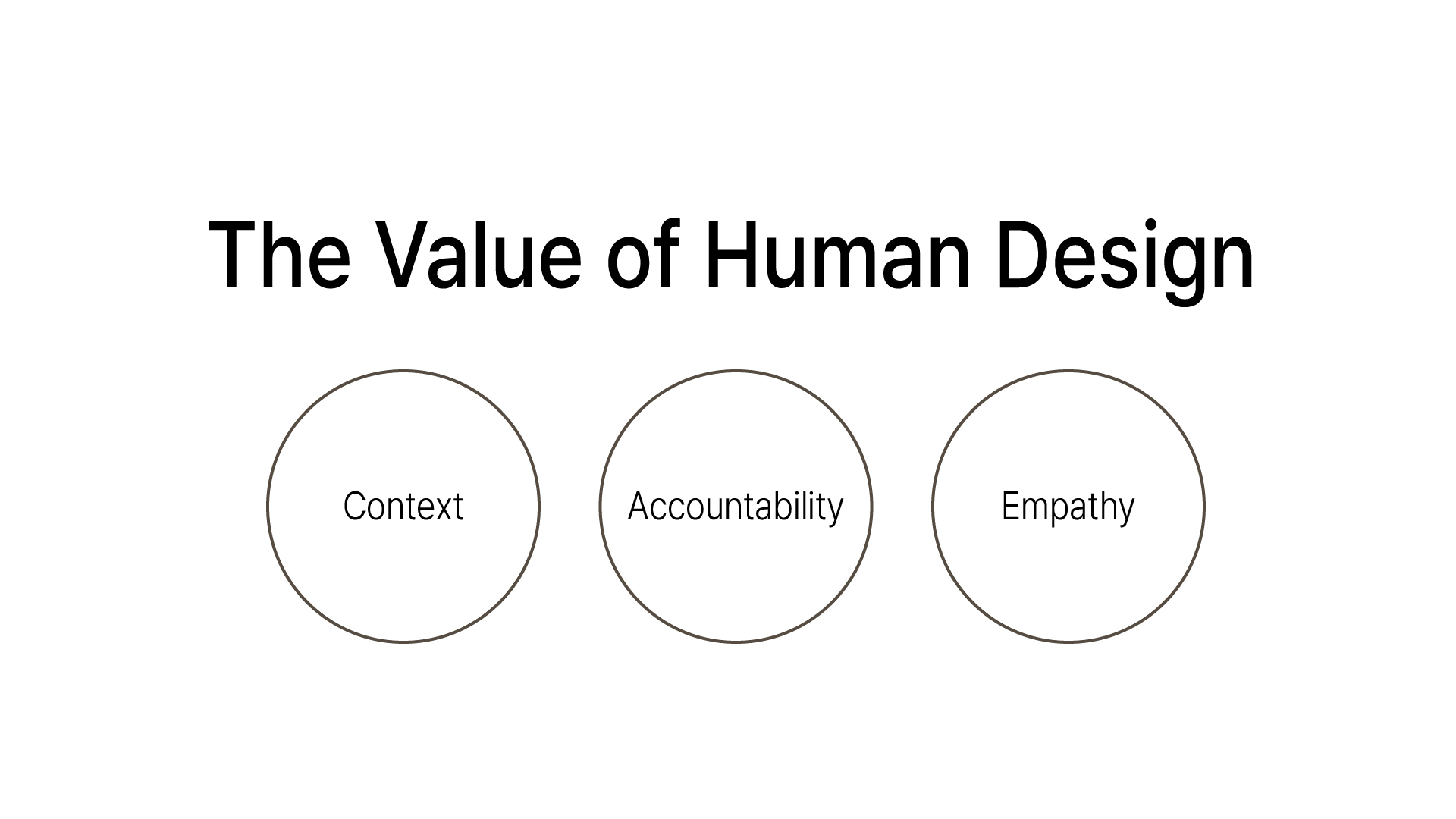
1. Context: AI reads global patterns. It does not understand your client's local market, their internal politics, or the cultural gap between a UAE audience and a US audience. That judgment call is human, every time.
2. Empathy: AI can analyze heatmaps and session recordings. It cannot feel the frustration of a user struggling with a checkout flow that's technically functional but psychologically coercive. Empathy is not a data point, it's a lived skill.
3. Accountability: This is the most overlooked moat. If an AI-designed flow fails to convert, who calls the client? Who owns the fix? A business pays a designer for their signature, the guarantee that a human expert has audited the logic and is willing to stand behind the result. AI cannot be held professionally accountable. Humans can.
Key Takeaway: Context, Empathy, and Accountability are the three human moats in design that AI cannot cross. They define the irreplaceable designer of 2026.
The line in the AI vs. human designers debate is drawn at one word: Intent.
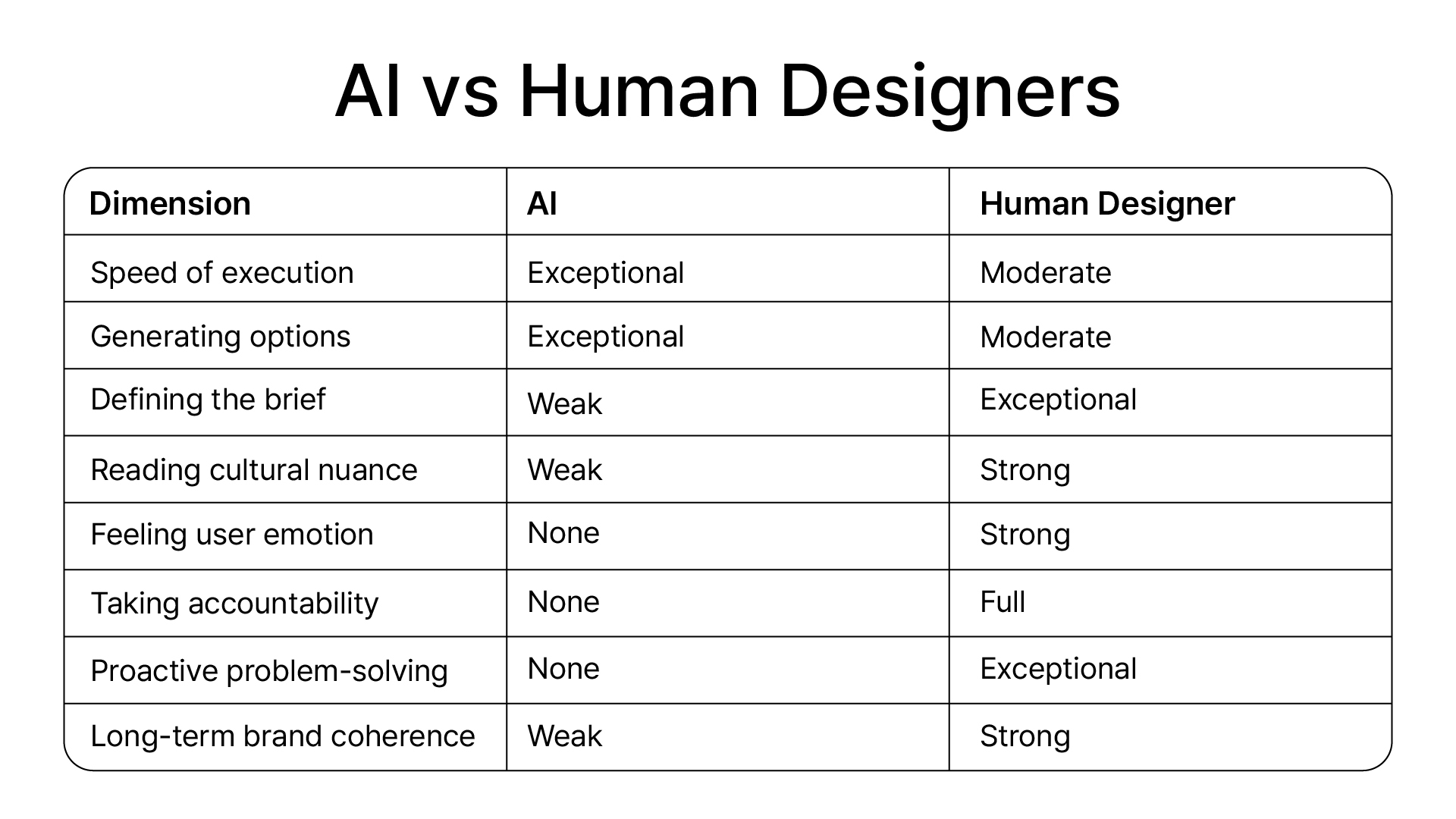
AI is reactive; it needs a prompt. Human designers are proactive; we find the opportunity inside a disorganized brief. AI is logical. Humans are psychological. Design lives in the gap between the two.
The future of design careers belongs to those who evolve. Here's how:
Yes, to commodity design. No to strategic design.
High-volume, template-driven production work (social media banners, ad resizing, basic logo variants) is being automated rapidly. If that describes your practice, the threat is real.
But building visual identity systems from scratch, navigating brand positioning, and making judgment calls that make a brand feel authentic rather than assembled, that work is growing in demand, because the contrast between AI-generated mediocrity and human-crafted excellence is becoming more visible, not less.
The answer is not to fight AI. It's to move up the value chain permanently.
The future of design with AI is a partnership, not a competition.
By 2028, the strongest designers will operate as creative directors of AI systems, defining intent, curating output, and taking accountability for results. At Integra Magna, our philosophy is: Simply Humanly Crafted. We use AI to compress execution time so we can invest more in what can't be automated: strategy, logic, empathy, and meaning.
Stop fearing the machine. Start directing it.
AI hasn't replaced you. It's freed you from pixel-pushing and template production so you can finally be the strategist the business always needed.
The designer who fears AI defines their value through execution speed. The designer who thrives with AI defines their value through judgment, accountability, and the human capacity to make something mean something.
The future is simply humanly crafted.
Can AI replace designers?
AI replaces the execution layer layouts, retouching, templates, and asset production. It cannot replace the strategic designer who defines creative intent, understands user psychology, and takes accountability for outcomes. In 2026, AI amplifies skilled designers; it does not replace them.
Will AI replace UX designers?
AI replaces production UX (wireframing, pattern application). Strategic UX research, information architecture, accessibility judgment, and behavioural insight =remains a human domain. Strategic UX designers are in growing demand.
What can AI not do in design?
AI cannot: (1) apply context-specific cultural and organisational judgment; (2) feel genuine human empathy; (3) accept professional accountability for a design's outcome. These three capabilities, Context, Empathy, and Accountability, are the core human moats in design.
What is the future of design with AI?
Designers will act as creative directors of AI tools, defining intent, curating output, and owning results. The role shifts from pixel-pusher to Architect. Integra Magna’s philosophy: Simply Humanly Crafted.
How do I stay relevant as a designer in 2026?
Shift from production to strategy. Master AI as a directing tool. Build cross-functional fluency in business and marketing. Develop deep domain expertise. Own accountability for outcomes, not just deliverables.
Is AI a threat to graphic designers?
AI directly threatens commodity, high-volume graphic design. It does not threaten strategic visual identity work rooted in brand positioning and client relationships. Designers who move from production to strategy will survive and grow.
What are the three human moats in design?
Context (localised, organisational judgment), Empathy (intuitive understanding of user emotion and behaviour), and Accountability (professional responsibility for design outcomes). These three are what make human designers irreplaceable.