
Your brand is starting to feel dated. The logo looks like it was designed in a different era. Your competitors look sharper, and your own marketing team has stopped using the brand guide because it no longer feels right. You know something needs to change.
The question is: do you refresh the brand or rebuild it from the ground up?
The bottom line: A brand refresh is an evolution that modernizes what exists without changing who you are. A rebrand is a reinvention it changes your strategy, positioning, and sometimes your name. Choosing the wrong path wastes budget, dilutes equity, and confuses customers. The choice is a business decision, not an aesthetic one.
The confusion between these two terms is understandable, as both involve making changes to a brand. But the scope, the investment, and the strategic intent are fundamentally different.
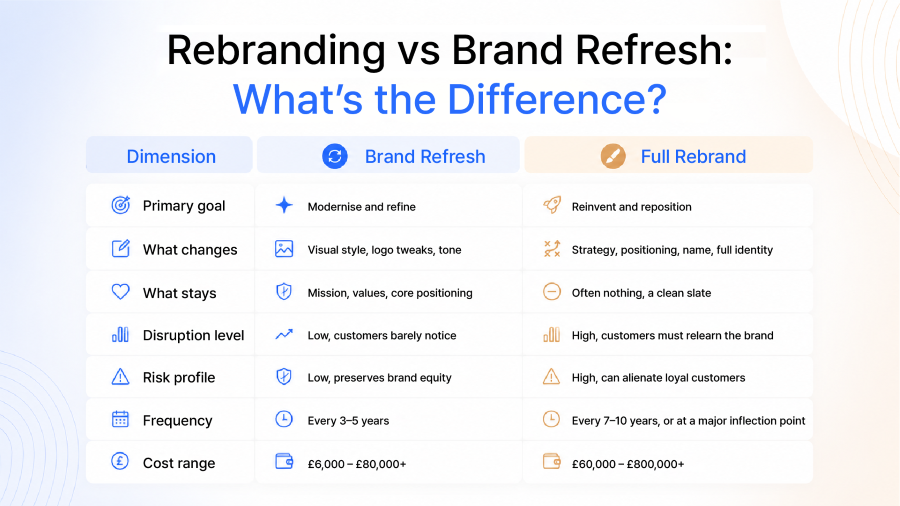
A refresh says: We are the same brand, presented better. A rebrand says: We are a different company now.
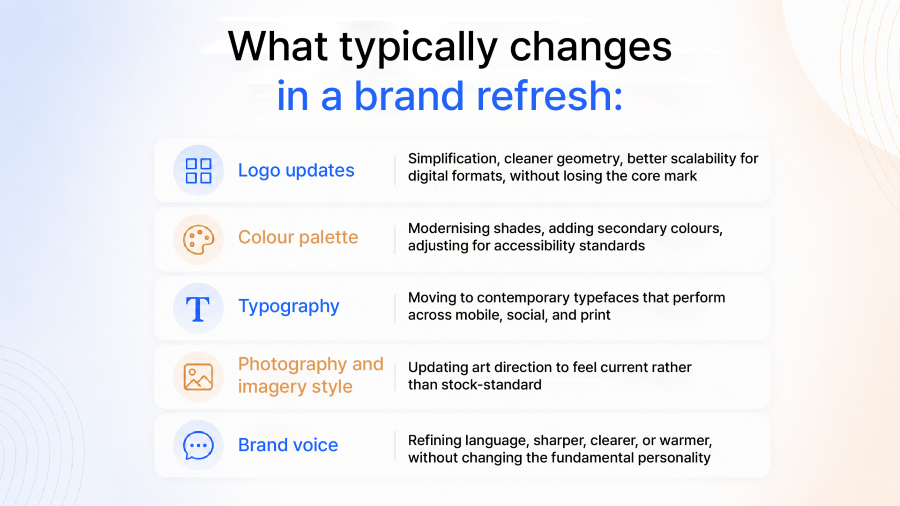
A brand refresh is a targeted evolution. The strategy stays intact. The brand equity is preserved. What changes is the expression the visual polish, the updated typography, the colour palette that now works across digital and print, the tone that sounds more like a 2026 business.
What typically changes in a brand refresh:
What does not change in a brand refresh:
Real examples of brand refreshes:
The common thread: these brands knew who they were. They just needed to look like it again.
A rebrand is not a visual update. It is a strategic reset and it is appropriate only when the business itself has fundamentally changed or needs to.
A rebrand typically touches:
Real examples of full rebrands:
"A rebrand without a strategy shift is just an expensive aesthetic exercise. A rebrand that follows a genuine strategic evolution is one of the most powerful tools a business has." Integra Magna
This is where the strategic choice becomes a financial one. The cost gap between a refresh and a full rebrand is significant and it widens depending on your number of touchpoints, the complexity of your rollout, and whether a name change is involved.
Brand Refresh Cost Range:
Typically covers: logo refinement, colour and type updates, brand guide revisions, digital asset updates
Full Rebrand Cost Range:
Covers: strategic research, stakeholder alignment, naming (if applicable), full identity development, global asset replacement, internal change management
Hidden costs to factor in:
The rule of thumb used by many brand consultancies: allocate 10–20% of your annual marketing budget to the initiative, regardless of scale.
Before briefing any studio or consultant, answer these five questions honestly:
Decision framework:
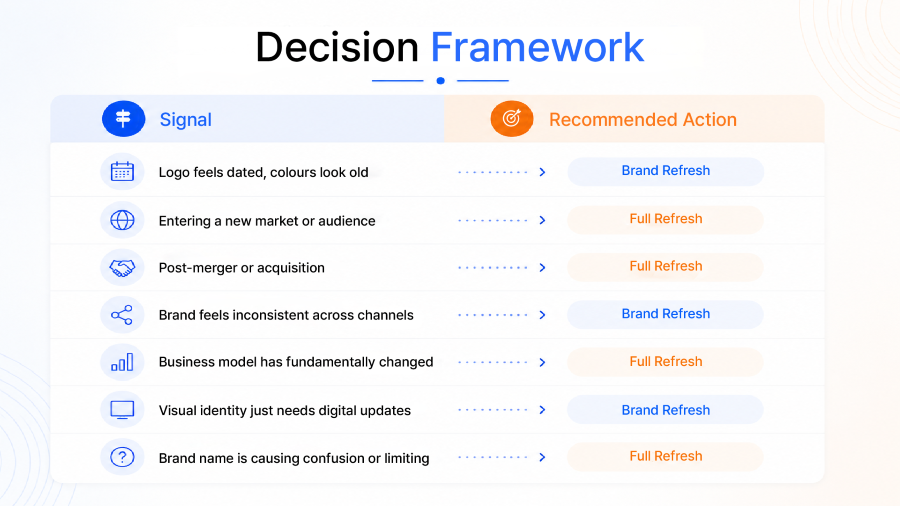
Choosing incorrectly is a more common and more costly mistake than most businesses realize.
Refreshing when you needed a rebrand: Your brand continues to attract the wrong clients, command the wrong price point, or fail to communicate what the business has become. The cosmetic update buys time, but the strategic mismatch continues to create friction across every sales conversation.
Rebranding when you needed a refresh: You destroy brand equity that took years to build. Loyal customers feel confused. Search rankings drop as brand name recognition resets. The business faces a recognition gap that requires months or years of marketing spend to close.
The data on failure is sobering: approximately 77% of rebranding efforts fail due to poor strategic rationale, execution gaps, or failing to bring customers and teams along for the transition. The brands that succeed treat the rebrand as an organizational change initiative, not just a design project.
By contrast, consistent brand presentation which a well-executed refresh can restore is associated with revenue increases of 10–23% across industries.
A brand refresh is not a small rebrand, and a rebrand is not a dramatic refresh. They are different tools for different problems and the right choice starts with an honest assessment of what the brand actually needs, not what feels most exciting or most comfortable.
If your business is fundamentally the same same mission, same audience, same strategic direction but the identity has not kept pace with where you are today, a refresh is your most efficient path forward.
If the business has genuinely changed new market, new model, new audience then protecting an old identity is not loyalty to the brand. It is resistance to growth.
At Integra Magna, we begin every brand engagement with a diagnostic not a design brief. If you are not certain whether your brand needs refreshing or rebuilding, start with a brand audit. Clarity on the problem is worth more than speed on the solution.
What is the difference between rebranding and a brand refresh?
A brand refresh is a targeted evolution that modernizes your existing visual and verbal identity updating the logo, colours, typography, or tone while keeping your core strategy, positioning, and values intact. A full rebrand is a strategic reinvention that typically involves changing your mission, target audience, positioning, and complete visual identity. The key distinction is whether the business itself has changed or simply needs to look and feel more current.
When should a company do a full rebrand?
A full rebrand is appropriate when the business has undergone a fundamental shift: a merger or acquisition, a pivot to a new market or audience, a significant reputation crisis, or when the existing brand name and identity actively create confusion or limit growth. If the strategy has changed, the brand must follow. If only the visual expression is out of date, a refresh is the more strategic and cost-effective choice.
How much does a brand refresh cost compared to a full rebrand?
A brand refresh typically costs between £6,000 and £80,000+ depending on business size and scope. A full rebrand can range from £60,000 to over £1 million for large organizations, with additional costs for name trademarking, website overhaul, global asset rollout, and internal change management. Most brand consultancies recommend allocating 10–20% of the annual marketing budget to the initiative.
What does a brand refresh include?
A brand refresh typically covers: logo simplification or modernization, colour palette updates, typography changes, photography and imagery style direction, and brand voice refinement. It does not include changes to brand strategy, target audience, core messaging architecture, or the brand name. The goal is to ensure the expression of the brand is aligned with where the business is now not to change who the business is.
Can you refresh a brand without changing the logo?
Yes. A brand refresh does not require a logo change. Many businesses refresh their identity through updated colour palettes, typography, photography direction, and verbal tone without touching the logo at all. If the logo still functions well scales across digital formats, remains recognizable, and holds the right visual equity there may be no reason to change it. The refresh targets wherever the expression has fallen furthest behind.